
Ethiopia Tours
Ultimate Ethiopia Tour
Join us on an 18 day exploration of Ethiopia. From the ancient history of the north to the tribal villages of the south. This is the Ultimate Ethiopia Tour.
Tour Overview
Embark on an 18-day adventure through the enchanting landscapes and rich cultural tapestry on the Ultimate Ethiopia tour. This comprehensive tour offers a captivating journey through Ethiopia, from the lush highlands to the tribal south. As a result, it unveils hidden treasures at every turn.
Our tour commences in the vibrant capital, Addis Ababa. Here we immerse ourselves in the dynamic energy of this bustling metropolis. Then, continuing our odyssey, we traverse the Simien Mountains National Park. This dramatic landscape is characterised by jagged cliffs, deep valleys and rare wildlife. After that, the journey takes a scenic turn as we descend to the legendary Blue Nile Falls. They are fondly known as the "Smoking Water."
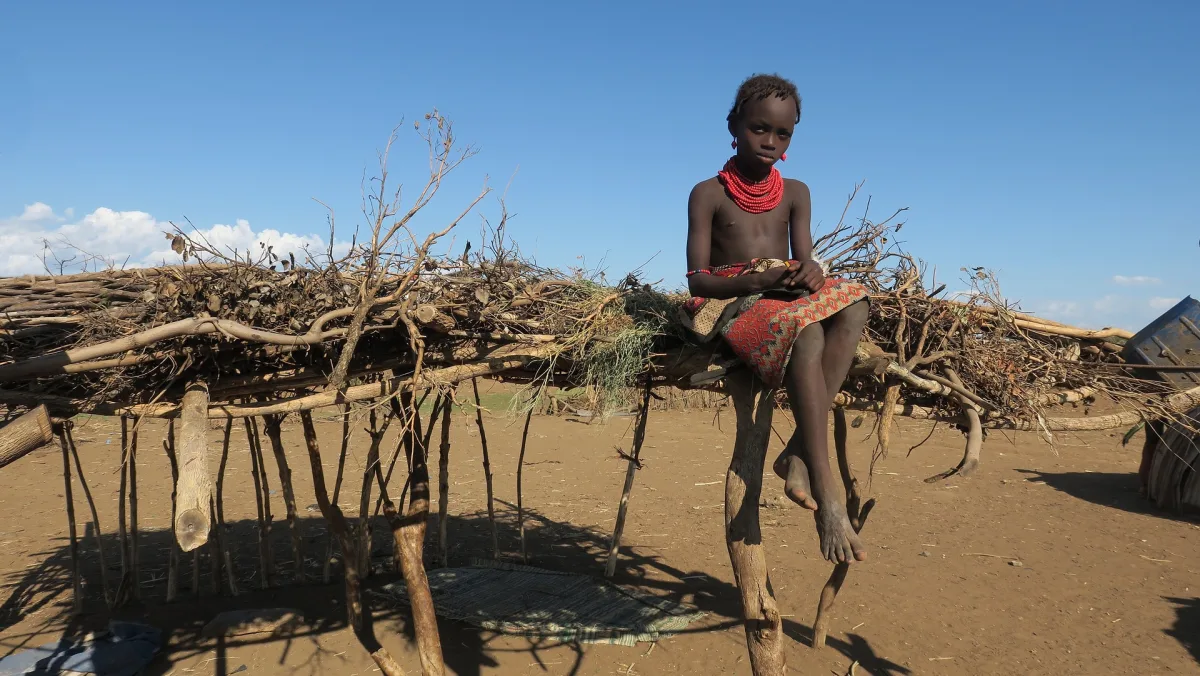
Discover the historic marvels of Lalibela, a UNESCO World Heritage site renowned for its remarkable rock-hewn churches. Witnessing these ancient wonders carved into the mountains is a humbling experience that transports us back in time. Then, leaving the north behind, we venture south to the bewitching Omo Valley. It is home to diverse ethnic tribes living in harmony with nature. Explore their vibrant traditions, intricate body art and colourful ceremonies. In short, this is a glimpse into a world seldom seen by outsiders.
Finally, we return to Addis Ababa, our minds and hearts overflowing with memories of Ethiopia's awe-inspiring beauty and cultural richness. This 18-day journey has truly been an odyssey through time and tradition. Above all, it is an experience that transforms and rejuvenates.
Day By Day
Your Itinerary
DAY 1
Welcome to Ethiopia
On arrival, our representative will meet you at the airport and take you to your hotel. After breakfast, visit the National Museum of Ethiopia and the enthralling Ethnological Museum. The latter is set within Haile Selassie's former palace on Addis Ababa University's main campus. Before lunch, visit Holy Trinity Cathedral Church. Then drive up to the Entoto Mountains for panoramic views of the capital. Here you also find the churches of Saint Raguel and Saint Mary.
Overnight in Swiss Inn Nexus Hotel, Addis Ababa
DAY 2
Gondar
Fly to Gondar, the first capital city during the reign of Fasilides. It is home to a dozen castles built by various emperors over 236 years. As a result, the city has a more European than African character. First, visit Fasiladas' Palace, the oldest and most impressive of the castles. Then see the Church of Debre Berhan Selassie, decorated with beautiful frescos, cherubs and paintings. It is rumoured to have once been the proposed final resting place of the Ark of the Covenant.
Overnight in Goha Hotel, Gondar
DAY 3
Simien Mountains
Drive to Simien Mountains National Park via Debark, a small market town. Here you register at park headquarters, and an armed scout joins you (a park regulation). Then drive to Sankaber through the foothills, past tended fields and grazing horses. There are superb views across the eroded landscape. Meanwhile, keep an eye out for your first Lammergeiers and Gelada baboons.
Overnight in Simien Lodge
DAY 4
Simien Mountains National Park
Depart with a picnic lunch for Chenek, where it's possible to spot the endemic Walia ibex. Here, panoramic views stretch over the escarpment's deep gorges. You may also see troops of Gelada baboons and, with luck, the endemic Ethiopian wolf. Afterwards, drive back to Gondar in the late afternoon.
Overnight in Goha Hotel, Gondar
DAY 5
Drive to Bahir Dar
Drive to the beautiful city of Bahir Dar. Then visit the Blue Nile Falls, known locally as Tissisat ("smoking waterfall"). The falls are 100m wide and plunge 45m, giving rise to steam clouds and rainbows. Afterwards, return to Bahir Dar for a lovely sunset over Lake Tana.
Overnight in Jacaranda Hotel, Bahir Dar
DAY 6
Bahir Dar and Lake Tana
Take a boat trip on Lake Tana, home to 37 islands. Of these, 32 have churches and monasteries of historical and cultural interest. For example, you visit Ura Kidane Mihret, the best-known monastery. It has an important collection of religious icons from the 16th-18th centuries. Then, in the afternoon, explore Bahir Dar. This includes the one-table Fish Market behind St George's Church, where pelicans feed on the afternoon scraps. You also see the Palace of Haile Selassie.
Overnight in Jacaranda Hotel, Bahir Dar
DAY 7
Lalibela
Today is a long but beautiful drive to Lalibela, a UNESCO World Heritage site. It is a mystical wonderland of rock-hewn churches carved meticulously from solid stone. There is also a chance to stretch your legs in the small villages along the way.
Overnight in Maribela Hotel, Lalibela
DAY 8
The Rock-Hewn Churches
Explore the impressive cluster of 11 monolithic churches named after King Lalibela. You can also marvel at the intricate architecture, carvings and underground passageways connecting these holy sites. All were crafted with unwavering faith and remarkable craftsmanship.
Overnight in Maribela Hotel, Lalibela
DAY 9
Yemrehanna Kristos Church
Drive to Yemrehanna Kristos, passing rural Ethiopian highland countryside en route. This hidden gem of medieval architecture has beautifully preserved frescoes and intricately carved wooden ceilings. It also has a unique blend of Aksumite and Zagwe architectural styles. Then return to Lalibela for lunch. Afterwards, visit the most famous of all the churches, Bet Giyorgis, built in honour of Ethiopia's patron saint, Saint George.
Overnight in Maribela Hotel, Lalibela
DAY 10
Trek to Asheton Maryam Monastery
Trek to Asheten Mariam, a 13th-century rock-hewn monastery about 8km from Lalibela at almost 4,000m altitude. It is carved out of a cliff face and is still in active use. A resident priest also shows visitors sacred items, including crosses and an illustrated Bible. However, you can do part of the challenging hike by mule if preferred.
Overnight in Maribela Hotel, Lalibela
DAY 11
Return to Addis Ababa and Onto Hawassa
Fly from Lalibela to Addis Ababa. Then continue south to Hawassa, capital of the southern region, on the shores of Lake Hawassa. It is ideal for birdwatching and is also home to one of the country's biggest hippo populations.
Overnight in Haile Resort, Hawassa
DAY 12
Hawassa
Visit the daily fresh fish market on the shores of Lake Hawassa. It is a truly local experience, with the Ethiopian version of "sushi" and several aquatic birds to spot. Then, in the afternoon, travel to Wondo Genet, a recreational centre built for Emperor Haile Selassie I's royal family. Here you enjoy a bath in a natural thermal spring and a beautiful sunset.
Overnight in Haile Resort, Hawassa
DAY 13
Arba Minch
Drive to Arba Minch, stopping in the villages of the Dorze people. They are a small, warm and welcoming Omotic-speaking ethnic group. They are also known for cotton weaving and bamboo-woven huts. Afterwards, continue to Arba Minch, capital of the ancient Gamu-Gofa province.
Overnight in Haile Resort, Arba Minch
DAY 14
Lake Chamo and Nechisar National Park
A boat tour of Lake Chamo may reveal crocodiles, hippos and waterfowl. Then continue to the Konso region to visit a typical village. The Konso people are known for their distinctive religious and cultural traditions and elaborate funerary rituals. They are also known for carved wooden "waga" statues memorialising important community members.
Overnight in Eco Omo Lodge
DAY 15
Mago Park and the Mursi Tribe
Drive to Mago National Park to visit a Mursi village. The Mursi are known for the large clay discs worn by women in their lower lip. The lip is stretched from age 12-16 with increasingly larger wooden plugs. Eventually, it can hold a 6-inch clay disc. Meanwhile, Mursi men traditionally wear little, although a cotton wrap is increasingly common.
Overnight in Buska Lodge, Turmi
DAY 16
Omorate
Cross the Omo River to visit the Dassanech tribe, the most southerly tribe in the Omo Valley. It is made up of eight co-residential clans. The largest is the Galbur (Water and Crocodile clan), believed to hold power over both. Then, in the afternoon, visit the Hamer people, renowned for their striking hairstyles. They are also famed as among the friendliest people in Ethiopia.
Overnight in Buska Lodge, Turmi
DAY 17
Return to Arba Minch
Head back to Arba Minch via Key Afar and Konso. Thursday is market day in Key Afar, when the Benna and Tsemai tribes trade goods. Therefore, we spend time exploring if the timing aligns.
Overnight in Haile Resort, Arba Minch
DAY 18
Addis and Departure
Return to Addis Ababa this afternoon. Depending on your interests and departure time, there is also time for a quick shopping session. The tour then ends with a drop-off at Bole International Airport. Why not add on the Danakil Depression tour?
Interested in this tour?
Enquire About the Ultimate Ethiopia Tour
Tell us a little about what you’re looking for and one of our travel experts will get back to you.
Know Before You Go
Included & Excluded
What’s Included
17 nights' accommodation as described throughout the tour, on a B&B basis
Internal flights as mentioned, if flying internationally with Ethiopian Airlines (otherwise a $194 surcharge applies)
Professional English speaking wildlife and birding guide
Transportation in a fully air-conditioned vehicle for the duration of your tour. This is a minibus (4-7 people) or coaster bus (8-12 people).
Local guide and scout fees
Entrance fees – all entrance and excursion fees detailed in your itinerary, including boat trips at Lake Tana and Chamo
What’s Not Included
International travel to the start and end point. Contact us for information and flight options. A $194 surcharge per person applies if not travelling on Ethiopian Airlines internationally.
Any airport taxes
Travel insurance
Any visa requirements
Alcoholic drinks and drinks not mentioned
Any photography and video fees
Items of a personal nature
Tips for drivers and guides
Tour Map
Book With Confidence
Dates & Prices
Get in touch with Our Local Tour to book the Ultimate Ethiopia Tour.
Prices shown are per person, based on double or twin room occupancy. Get in touch if you’d like to check availability or discuss a private departure on different dates.
Good to Know
Travel Information
Safety, Passport, Visa and Health Information
We strongly recommend that you check your government's travel advisory for up-to-date information and advice about your destination. For example, it covers safety and security, entry requirements, health, local laws and customs. For UK citizens, check the latest Foreign, Commonwealth & Development Office advice for Ethiopia.
Your passport should be valid for a minimum of 6 months from the date of entry. It should also have at least two blank pages. You will need a valid visa before travelling. You can obtain it from the official Ethiopian e-visa platform or your nearest Ethiopian Embassy. Moreover, you must show a valid visa before boarding your flight and on entry. The penalty for overstaying is $10 per person per day. This is payable in full before you can leave the country.
Local Laws and Customs
Ethiopia is religiously diverse and largely tolerant. However, respect local traditions, customs, laws and religions, particularly during Ramadan or when visiting Ethiopian Orthodox sites. For example, modest dress is a must at religious sites. Women may also prefer to dress modestly in rural areas generally. Homosexual acts are illegal, carrying penalties of 1-15 years imprisonment. Therefore, avoid public displays of affection. It is illegal to photograph near military zones or personnel, the Presidential Palace, or anywhere signs prohibit it.
It is also illegal to carry more than 3,000 Ethiopian Birr when entering or leaving the country. The limit is 10,000 if travelling to Djibouti. Excess cash will be seized and may lead to prosecution. In addition, you need an export certificate to take antiques out of the country. Owning ivory is strictly prohibited. Drug offences are treated seriously. Khat is legal within Ethiopia, but it is illegal to take it out of the country. Bags are regularly searched at the airport. Finally, you cannot import satellite phones and binoculars without prior approval.
Health
At least 8 weeks before your trip, check the latest country-specific health advice. The National Travel Health Network and Centre (NaTHNaC) publishes this on the TravelHealthPro website. Only private hospitals in Addis Ababa offer a reasonable standard of basic care. Moreover, medical facilities are extremely poor outside the capital. Therefore, carry a comprehensive medical pack when travelling beyond Addis Ababa. Also make sure you have adequate travel health insurance and accessible funds. These should cover medical treatment, air ambulance evacuation and repatriation. Malaria is common below 2,000m, and bilharzia is present in most Ethiopian lakes. So check before swimming, and drink only boiled or bottled water. Altitude sickness is also a risk in parts of Ethiopia, including Addis Ababa.
What to Bring
Bring lightweight, casual, non-synthetic clothing, because cotton and natural fibres are best. It should appropriately cover the body when you are in the company of local communities. In other words, it doesn't need to be fancy, but it needs to be respectful. Walking shoes or boots plus sandals are the ideal footwear.
Please allow yourself one main piece of luggage and a day-sack. You're expected to carry your own baggage, so don't overload yourself. For example, a soft wheely bag may be easier to manage than a suitcase. We also recommend a sunhat, sun cream, a torch, insect repellent, a reusable water bottle and a power adapter. Finally, bring earplugs if you're a light sleeper.
While You're There
The Ethiopian Birr is the local currency. You may import an unlimited amount of foreign currency. However, you must declare it on arrival on the blue customs form. In addition, you may only exchange foreign currency at authorised banks and hotels. Keep your exchange receipts, because you'll need them to change any leftover Birr back at the airport before departure. Ethiopia is largely a cash-based society. For example, credit cards are accepted at very few outlets in Addis Ababa. International debit cards work at major banks' ATMs in the capital. However, banking facilities are very limited elsewhere, so carry enough cash before travelling beyond Addis Ababa.
The best time to visit is January to March, with regular daily temperatures around 25°C and peak wildlife spotting. However, this is also the busiest season. The rainy season (April-September) brings soaring temperatures and humidity. In addition, some Lower Omo Valley roads are impassable May-August. October to December is an excellent time to visit, with lush countryside and fewer crowds. However, highland nights can drop to 5-10°C, so pack warm clothing. Ethiopia uses a 220V/50Hz supply with type C/E/F/L plugs. Bring an adapter, because they can be hard to find locally. Internet is available in most cities, although connections can be unstable, especially outside major towns.
Ready to Book or Need More Information?
Get in touch with our expert travel consultants now. We can help you with tailor-made options, best times to travel and much more.