
West Africa Overland Expedition
West Africa Overland – Marrakech to Cotonou
Join us on this epic 56-day Sahara to Atlantic journey across West Africa.
A Journey Beyond Borders
Embark on the ultimate West Africa Overland adventure, a 56-day expedition that spans deserts, coastlines, and vibrant cultures. Starting in Marrakech, this journey takes you through Morocco's High Atlas mountains and across the golden dunes of the Sahara. Explore ancient caravan routes, hidden oases, and prehistoric rock art before reaching the Atlantic coast.
As you travel south, experience Morocco's dramatic estuaries and lagoons, then cross into Mauritania to discover Chinguetti and Ouadane, historic towns that echo centuries of Saharan heritage. Continue along Senegal's pristine beaches and colonial Saint-Louis, where colourful markets and lively streets showcase the region's charm.
Your route unfolds through The Gambia's lush wetlands and Senegal's Casamance, a land of rivers and mangroves. In Guinea-Bissau, navigate the Bijagos Archipelago, a sanctuary of biodiversity and cultural depth. Further inland, Guinea's Fouta Djallon highlands reveal breathtaking waterfalls, mountain vistas, and bustling markets.
The adventure continues through Sierra Leone, Liberia, the Ivory Coast, Ghana, Togo, and Benin, each offering unique encounters. Explore UNESCO-listed forts, vibrant music scenes, and sacred ceremonies. Wander through colonial towns, relax on palm-fringed beaches, and immerse yourself in the rhythms of local life. From the historic streets of Accra to the cosmopolitan energy of Abidjan, every stop adds a new chapter to your story.
Throughout this expedition, enjoy comfortable accommodations, authentic cuisine, and expert guidance. This is more than a tour – it is a cultural odyssey across diverse landscapes and histories, designed for travellers seeking depth, discovery, and connection.
Day By Day
Your Route
DAY 1-12
Morocco: Marrakech to the Sahara and Atlantic Coast
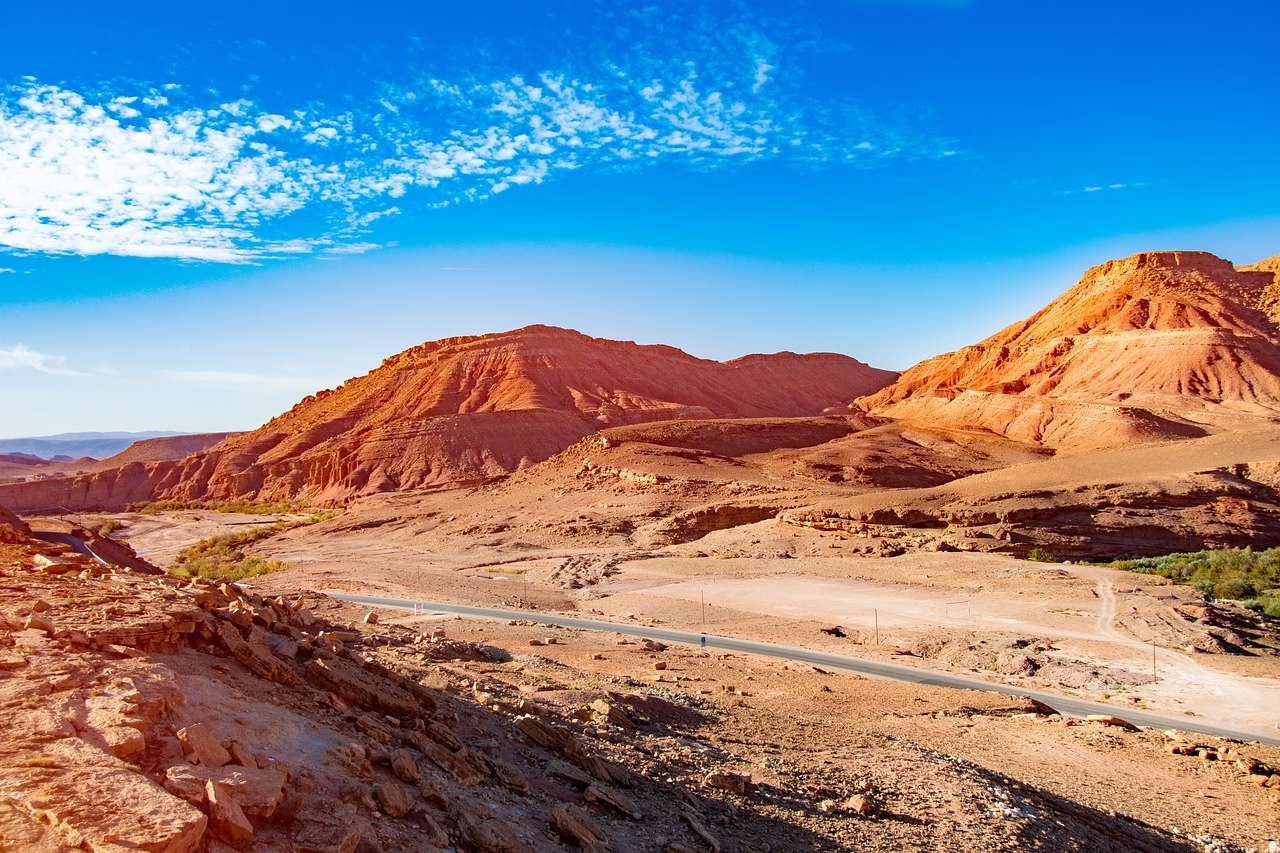
Fly into Marrakech, then head into the High Atlas to visit remote Berber villages and gem diggers, crossing the Tizi n'Tichka pass to Ait Benhaddou – the film-set ksar of Lawrence of Arabia and Gladiator – and the desert oasis of Ouarzazate. Follow the Ouadi Draa's palm groves to Zagora and Mhamid, then head off-road by 4×4 through the high dunes of Erg Chegaga in search of critically endangered white addax antelope, the dry Salt Lake of Iriki, and fossil sites. Continue through spectacular oasis country (Foum Zguid, Icht, Assa – home to the same ancient Arab-Berber stone architecture found later in Mauritania's Chinguetti) to a ghost military fort on the old Morocco/Spanish Sahara border, basing at Ksar Tafnidilt. Explore the wild Dra estuary, the Naila salt lagoon (Morocco's largest, a haven for up to 20,000 migratory birds), and the former Aeropostale airmail base of Tarfaya. In Laayoune, a Sahrawi nomad guide leads a 3-day off-road expedition camping under the stars in Bedouin-style tents across the Western Sahara's Saguia El Hamra and Tiris Zemmour regions to the Rio de Oro – a 25-mile sea loch where high tide floods the desert – and the Dakhla Peninsula, founded by Spanish navigators in 1502.
Overnight in Various – Novotel Kenzi Rose (Marrakech), Ksar Tafnidilt, mobile desert camp, Hotel Buena Vista (Dakhla)
DAY 13-19
Mauritania: The Adrar and Chinguetti
Cross the Moroccan border at Guerguerat, past a signboard marking the Tropic of Cancer, into Nouadhibou. Drive off-road through the high dunes of Erg Amatlich, one of Mauritania's most beautiful dune basins, discovering thousand-year-old stone tools and pottery and nomadic settlements en route to Chinguetti – the 13th-century stone citadel considered the jewel of the Mauritanian oasis, a crossing point of trans-Saharan trade routes, with the second-oldest still-operating mosque and minaret in the Muslim world. Visit Ouadane, Mauritania's remotest oasis, founded in 1147, and the lush oasis of Terjit with its rock shelter and spring. Arrive in the capital, Nouakchott, to visit the National Museum and Nouakchott's colourful fishing harbour.
Overnight in Various – Sahara hotel/La Gueila (Chinguetti), El Medina (Nouadhibou), Azalai (Nouakchott)
DAY 20-27
Senegal & The Gambia: Djoudj to Casamance
Cross the Senegal River into the Djoudj National Park, a UNESCO World Heritage wetland sanctuary for over a million migratory birds, then explore the historic twin-island town of Saint-Louis, first capital of French West Africa. Travel almost 100 miles off-road by 4×4 along the beach to Senegal's largest fishing village, meeting a local Marabut holy man, before visiting Lac Rose. In Dakar, see the Musée des Civilisations Noires and take the ferry to Gorée Island, a former slave-trading post. Continue to the salt pans of Kaolack, then cross into The Gambia via Banjul, before entering Senegal's Casamance region at Ziguinchor, where a Diola king receives the group in a remote village and sacred masked dances are performed.
Overnight in Various – Hotel de la Poste (Saint-Louis), Maison Municipal (Gorée), Kadiandoumange (Ziguinchor)
DAY 28
Guinea-Bissau: Arrival in Bissau
Cross into Guinea-Bissau (formerly Portuguese Guinea) through a unique tidal ecosystem where sea arms (Bolon) flood over 100 miles inland – 23% of the country's territory is underwater at high tide – arriving in the capital, Bissau.
Overnight in Azalai-Dunia Hotel, Bissau
DAY 29-32
Guinea-Bissau: Bijagos Archipelago
A 3-day speedboat tour of the 88-island Bijagos Archipelago, including Bolama, the former Portuguese Guinea capital now reclaimed by tropical vegetation, and Bubaque Island. Witness the Vaca Bruto (wild bull) masked dancing ceremony, a major dry-season ritual, and relax on Ponta Anchaca's wild beaches. Return to Bissau for a city tour, then visit a remote Malinké village of griot musician-narrators, whose families have passed down music traditions since the 13th-century Mali Empire, before arriving in Gabu.
Overnight in Ponta Anchaca Resort (Bijagos), Azalai-Dunia (Bissau), Hotel Karsa (Gabu)
DAY 33-36
Guinea: Fouta Djallon Highlands
Cross into Guinea's Fouta Djallon massif, the mountainous 'water reservoir of West Africa' from which the Niger, Senegal and Gambia rivers all rise, home to the Fulla people renowned as cattle breeders. Visit Labe's busy market, a waterfall complex, and the mountain town of Dalaba, including the Jardin Chevalier botanical garden. In a remote village, be received by the council of elders of the oldest Fulla Kingdom after presenting traditional cola-nut gifts. In Kindia, enjoy a tasting of Guinean cuisine followed by the dramatic Baga Nimba masked dance from the sacred forest, one of the country's cultural symbols.
Overnight in Tinka hotel (Dalaba), Hotel Masabi/Moringa (Kindia)
DAY 37-40
Sierra Leone: Freetown to Bo
Cross into Sierra Leone and arrive in Freetown, exploring its colonial architecture, the National Museum's tribal mask collection, and the Sierra Leone Peace Museum documenting the decade-long civil war. Drive the coast beneath the 'Sierras' (mountains of the lion) that give the country its name to Kent, then boat across to Banana Island for a night among pristine beaches and a Kriol village with a Caribbean feel. Continue to Bo, the country's second city, to meet artisanal diamond miners and witness the Bundo masks – a rare example of masks as a female domain among the Mende people.
Overnight in Swiss Hotel (Freetown), Bafa Lodge (Banana Island), Bo Inn/Dohas hotel (Bo)
DAY 41-42
Liberia: The Pepper Coast
Cross the Mano River border into Liberia, once known to European traders as the Pepper Coast, arriving in Monrovia. Liberia is Africa's only nation never colonised, founded by freed Kreyol slaves returning from the USA – visit the Grand Masonic Temple, the ruins of the once-grand Ducor Palace Hotel overlooking the city, and the National Museum's civil war exhibition, before continuing to Ganta.
Overnight in Cape Hotel, Monrovia; Alvino Hotel, Ganta
DAY 43-48
Ivory Coast: Liana Bridges to Grand Bassam
Cross into Ivory Coast to see a genuine liana bridge – built purely from forest materials with no nails or rope, by initiated craftspeople under cover of a single night, according to tradition. In Man, capital of the We, Dan and Guéré peoples, witness masks emerging from the forest to drumming, and browse the region's important handicraft market. A remote 4×4 excursion may reveal the rare 'jugglers' – initiated girls in white kaolin face paint performing acrobatic dance. Travel through coffee and cocoa country (Ivory Coast is the world's largest cocoa producer) to see the Zaouli masked dance, then reach Yamoussoukro to visit the Basilica of the Virgin of Peace, modelled on St Peter's in Rome. Continue to Abidjan, exploring the fast-growing Plateau district and the Fanico launderers of Youpugon, before a final stop in the old colonial resort town of Grand Bassam.
Overnight in Hotel Amoitrin (Man), Royal Hotel (Yamoussoukro), Hotel Azalai (Abidjan), Hotel le Rochè (Aboisso)
DAY 49-52
Ghana: The Gold Coast to Accra
Cross into Ghana – the historic Gold Coast, named for the gold trade that drew Portuguese navigators in the 13th century. Visit St. Antonio Fort at Axim and Elmina Castle, the oldest European building in Africa (built 1482) and a UNESCO World Heritage site once used in the gold, ivory and slave trades. In Kumasi, historic and spiritual capital of the Ashanti Kingdom, explore one of Africa's largest central markets and the Ashanti Cultural Centre, with a chance to meet a traditional chief. Finish in Accra, exploring the James Town neighbourhood and a workshop specialising in elaborate handcrafted 'fantasy coffins'.
Overnight in Anomabu Beach Resort, Miklin Hotel (Kumasi), La Villa Boutique Hotel (Accra)
DAY 53
Togo: Lomé
Cross into Togo, arriving in Lomé – one of the few African capitals sitting directly on a border, historically ruled successively by Germany, Britain and France. Visit the central market, home to the 'Nana Benz' cloth traders, and the largest fetish market in Africa, an eclectic source of ingredients for traditional Voodoo ceremonies.
Overnight in Hotel Onomo, Lomé
DAY 54-56
Benin: Voodoo, Ouidah and the Stilt Village
Cross into Benin, where Voodoo remains the main coastal religion – witness an authentic ceremony with drumming, chanting and trance possession by spirits such as Sakpata, Heviosso and Mami Water. In Ouidah, once the main slave-shipping port of the Slave Coast, follow the historic 'slave road' to the 'door of no return', and visit the Python Temple and Portuguese Fort museum. Witness the tall, straw-covered Zangbeto masks, believed to protect villages from evil spirits. The expedition concludes crossing Lake Nokoué by motorised boat to Ganvié, the largest African stilt village, home to around 25,000 Tofinou people, before a day room and airport transfer in Cotonou.
Overnight in Awale Plage (Grand Popo), Hotel Casa del Papa (Ouidah)
Interested in this tour?
Enquire About the West Africa Overland – Marrakech to Cotonou
Tell us a little about what you’re looking for and one of our travel experts will get back to you.
Know Before You Go
Included & Excluded
What’s Included
Arrival and departure transfers
Itinerary in 4WD vehicles, minibus and boats
Accommodation in standard rooms, as per the itinerary
All meals, from breakfast on Day 2 to breakfast on the last day of the expedition
Tours and visits as per the programme
Entrance fees to parks, concessions, protected areas and cultural sites
What’s Not Included
International travel to the start and end point – contact us for information and flight options
Any airport taxes
Travel insurance
Visa fees
Mineral water and drinks at restaurants and hotels
Items of a personal nature
Tips for driver, guide and hotel staff
Anything not mentioned as included
Book With Confidence
Dates & Prices
On certain dates this expedition operates in reverse – contact us for details. This is also just one of 25 legs of the wider expedition, from 7-day West Africa sections to the full 56-day Sahara-to-Atlantic crossing – get in touch to discuss options.
Prices shown are per person, based on double or twin room occupancy. Get in touch if you’d like to check availability or discuss a private departure on different dates.
Good to Know
Travel Information
Safety, Passport, Visa and Health Information
We strongly recommend that you check your government’s travel advisory for up-to-date information and advice about your destination: safety and security, entry requirements, health, local laws and customs. For UK citizens, check the latest Foreign, Commonwealth & Development Office advice for each country on the route.
Visa requirements vary considerably by country on this route – please contact us for the full current list and application procedures. As a general guide: Morocco is visa-free for most nationalities; Mauritania, Guinea-Bissau, Guinea, Sierra Leone, Liberia, Ivory Coast, Ghana, Togo and Benin generally require a visa (often available as an e-visa or on arrival); The Gambia requires a visa for most travellers; Senegal is visa-free for many nationalities. Your passport should be valid for at least six months beyond your return date, with a minimum of two blank pages for stamps – multiple-entry visas may be required depending on your border crossings, and proof of onward travel and accommodation may be requested.
At least 8 weeks before your trip, check the latest country-specific health advice from the National Travel Health Network and Centre (NaTHNaC) on the TravelHealthPro website for each country on the route.
It is a condition of booking with Our Local Tour that you have adequate valid travel insurance, fully covering medical expenses and emergency repatriation, including medical emergency helicopter evacuation, for the entire duration of your holiday and all activities you intend to undertake, including optional activities.
What to Expect on the Expedition
You will travel with expedition leaders experienced in off-the-beaten-track travel across West Africa and the Sahara. This is a genuine exploratory itinerary – participants need to be flexible and ready to enjoy unique encounters as well as the occasional unexpected situation that comes with African travel. Please keep luggage to approximately 20kg, as 4×4 vehicles are used on rough roads and tracks (with minibuses on main roads), plus speedboats and local boats for island crossings.
Hotels are carefully chosen for service quality and, where possible, architectural character – four-star in the capitals, the best available inland, always with air-conditioning, though room availability may occasionally require a comparable substitute. Two nights are spent at a mobile camp in the remotest part of the Western Sahara (large tents with mats, blankets and chairs, a restaurant tent if windy, and portable facilities), and two nights in a fixed camp on Banana Island. Lunches are cold meals, picnics or pre-selected restaurant menus; dinners are pre-selected hotel restaurant menus, including one bottle of water each day during visits. Itineraries, visits and accommodation can be modified to suit local conditions or force majeure – only the organisers and tour leader can decide any changes.
Ready to Book or Need More Information?
Get in touch with our expert travel consultants now. We can help you with tailormade options, best times to travel and much more.