
Guinea-Bissau Tours
Guinea-Bissau and Bijagos Islands Tour
Explore Guinea-Bissau on a journey through the Bijagós Archipelago, sacred villages, and the unforgettable Bissau Carnival.
Discover Guinea-Bissau and the Bijagos Islands
This nine-day journey offers a unique chance to experience West Africa's rich culture, natural beauty, and living traditions. From the calm streets of Bissau to the wild charm of the Bijagos Archipelago, every day brings new discoveries.
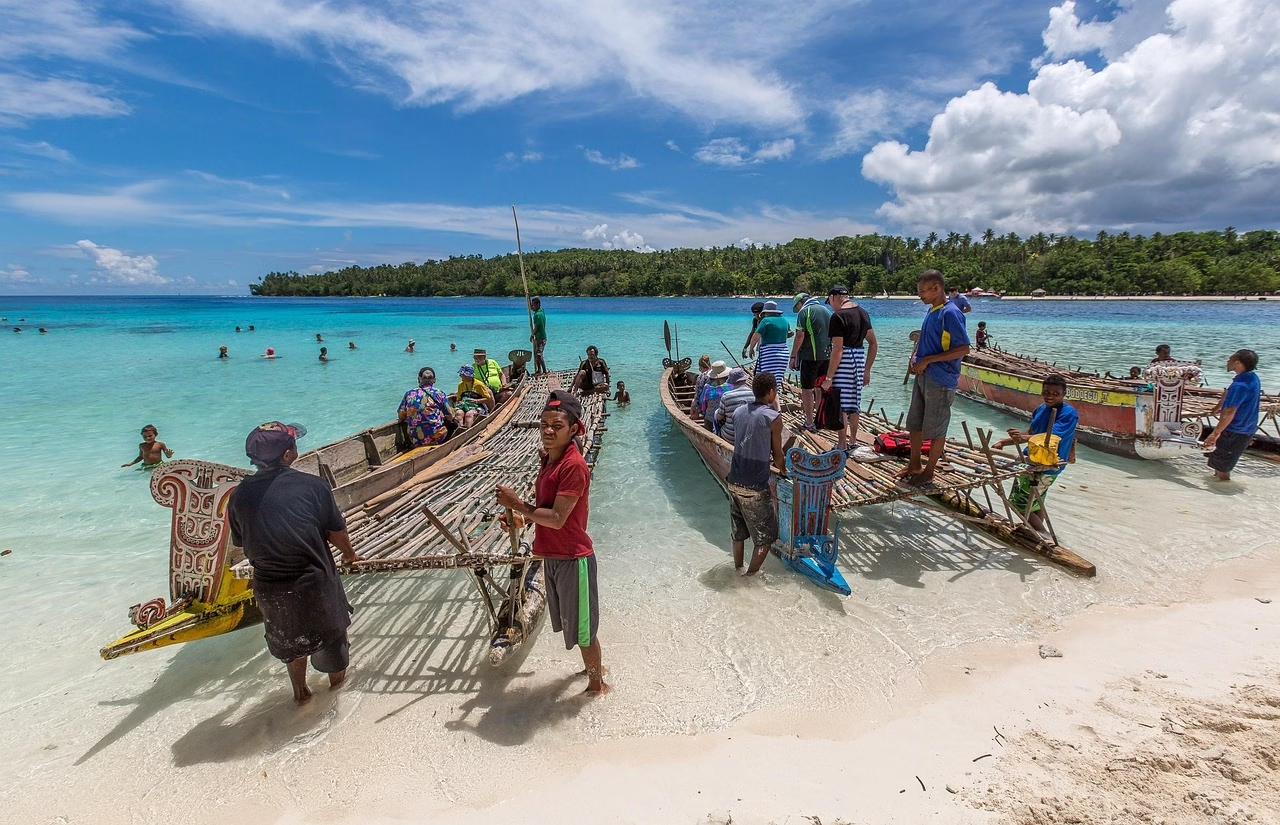
The adventure begins in Bissau, where travellers settle into the relaxed rhythm of the capital before heading out to sea. Soon after, a speedboat transfers the group to Rubane Island, the base for exploring the Bijagos – an archipelago of 88 islands, of which only 21 are permanently inhabited, its isolation preserving both landscapes and cultural heritage. The first stop is Bolama, once the capital of Portuguese Guinea – today, nature has reclaimed much of the town, though its neo-Palladian architecture and Roman-inspired layout remain striking.
Orango National Park introduces a rare highlight, the saltwater hippo, an elusive mammal inhabiting mangrove swamps that occasionally swims in the ocean. Not every moment is about adventure – on Rubane, guests can unwind on pristine beaches, swim in the lodge's pool, or take leisurely walks through lush vegetation.
Back on the mainland, the journey continues with visits to Manjaco communities, where carved wooden ancestor poles known as Pecab are kept in sacred spaces. Finally, the tour concludes in Bissau during Carnival, the country's most vibrant celebration, with streets overflowing with music, colour, and movement blending African, Portuguese, and Brazilian influences.
Day By Day
Your Itinerary
DAY 1
Arrival in Bissau
Arrive in Bissau and transfer to your hotel for check-in, with time to settle in and relax after your journey.
Overnight in Hotel Dunia Azalai, Bissau
DAY 2
The Ghost Capital and Bijagos Archipelago
Board a speedboat for a five-day adventure through the Bijagos Archipelago, located about 40 miles offshore. The first stop is Bolama, former capital of Portuguese Guinea (1871-1941), now partly reclaimed by tropical vegetation – stroll wide, sunlit avenues past neo-Palladian buildings and dry fountains, where goats now graze among the classical columns of the old Administration Palace. Continue to Rubane Island for a four-night stay at an oceanfront lodge.
Overnight in Ponta Anchaca Resort or Lodge les Dauphins, Rubane Island · Meals included: Breakfast, lunch, dinner
DAY 3
Villages and Cultural Traditions
Take a speedboat excursion to an ancient Bijagos village, then to Bubaque, the archipelago's largest settlement and only one linked to the mainland by a weekly ferry, with unpaved alleys, a colourful market and a small ethnographic museum. With local guidance, you may witness traditional mask dances or initiation rituals in nearby villages.
Overnight in Ponta Anchaca Resort or Lodge les Dauphins, Rubane Island · Meals included: Breakfast, lunch, dinner
DAY 4
Searching for Saltwater Hippos
Travel to Orango, a protected area of four islands separated by tidal channels, sheltering the rare saltwater hippo, which lives in mangrove ponds and occasionally swims in the ocean – a local ranger guides you on foot to try to observe them, season permitting.
Overnight in Ponta Anchaca Resort or Lodge les Dauphins, Rubane Island · Meals included: Breakfast, lunch, dinner
DAY 5
Island Life and Leisure
A day of relaxation on the beach or by the pool, with an optional walk through lush vegetation to visit traditional fishing communities for those seeking more activity.
Overnight in Ponta Anchaca Resort or Lodge les Dauphins, Rubane Island · Meals included: Breakfast, lunch, dinner
DAY 6
Back to Bissau
A morning unwinding on the island before travelling by speedboat back to Bissau (departure time depends on tides and weather) and checking in to your hotel.
Overnight in Hotel Dunia Azalai, Bissau · Meals included: Breakfast, lunch, dinner
DAY 7
Sacred Art and Cultural Heritage
Follow a narrow track to remote Manjaco communities, where some households maintain ancestor altars of sculpted wooden poles known as "Pecab," housed in sanctuaries called "Cab Balugun" – with elders' permission, view these sacred carvings. Continue to Cacheu, founded in 1588 as an important Portuguese trading post, to visit its fort and a slave-trade museum opened exclusively for your group.
Overnight in Delta Hotel · Meals included: Breakfast, lunch, dinner
DAY 8
Magical Villages and Local Traditions
Explore an area inhabited by the Pepel people, who live in thatched clay huts, meeting a fetish priest who consults ancestral spirits in a practice rooted in animistic belief. Visit a colonial-era, firewood-powered rum distillery to learn traditional sugar cane production methods, then stop at an open-air bar for a tropical mojito on the way back to Bissau.
Overnight in Hotel Dunia Azalai, Bissau · Meals included: Breakfast, lunch, dinner
DAY 9
Bissau Carnival and City Tour
A guided tour of Bissau-Velho, the old Portuguese quarter, taking in the Presidential Palace, Catholic Cathedral, Fortaleza Amura, Independence Monument, and Che Guevara Square. In the afternoon, Guinea-Bissau's most vibrant national celebration comes alive – sacred masks, warriors in crocodile skins and papier-mâché creations parade alongside dazzling costumed dancers, continuing into the evening, with late-night airport transfers available for departing guests.
Overnight in Day rooms, Hotel Dunia Azalai, Bissau · Meals included: Breakfast, lunch
Interested in this tour?
Enquire About the Guinea-Bissau and Bijagos Islands Tour
Tell us a little about what you’re looking for and one of our travel experts will get back to you.
Know Before You Go
Included & Excluded
What’s Included
Assistance at Bissau airport upon arrival and departure
Transfers and tours on roads and tracks by minibus or 4×4, plus speedboat fitted for the ocean crossing to the Bijagos Archipelago
Tour leader (English, French, Italian, Spanish and Portuguese spoken as available)
Tours and visits as per the programme
Accommodation in standard rooms/bungalows, as per itinerary
All meals as described – breakfast, lunch and dinner
One bottle of mineral water in the bus/car every day for each person
Entrance fees to parks, concessions, protected areas and cultural sites, festivals and events as in the programme
What’s Not Included
International flights
Any airport taxes
Travel insurance
Any visa requirements/fees
Mineral water and drinks at meals
Any photography and video fees
Items of a personal nature
Tips for drivers and guides
Book With Confidence
Dates & Prices
Contact us for departure dates. Maximum 16 people in the group.
From £2,695 per person, based on two people sharing
£455
Good to Know
Travel Information
Safety, Passport, Visa and Health Information
We strongly recommend that you check your government’s travel advisory for up-to-date information and advice about your destination: safety and security, entry requirements, health, local laws and customs. For UK citizens, check the latest Foreign, Commonwealth & Development Office advice for Guinea-Bissau.
To enter Guinea-Bissau, your passport must have an expiry date at least 6 months after the date you arrive. You must have a visa – a single-entry visa is available on arrival, though it's best to arrange this in advance with us. Contact the Guinea-Bissau Embassy in Paris for visa applications (Guinea-Bissau also has embassies in neighbouring countries, including Senegal). You must have a yellow fever vaccination certificate to enter.
You must carry ID such as a passport or residence permit, particularly when driving or in a taxi, as police forces regularly ask for it. There are severe penalties for all drug offences, and local prison conditions are harsh. Same-sex sexual relationships are not criminalised, but Guinea-Bissau is a conservative society, and same-sex couples showing affection in public may attract unwanted attention.
At least 8 weeks before your trip, check the latest country-specific health advice from the National Travel Health Network and Centre (NaTHNaC) on the TravelHealthPro website, including risks from dengue, Zika virus, yellow fever, schistosomiasis, malaria and HIV/AIDS. For emergency medical assistance, call 1313 and ask for an ambulance, and contact your insurance company promptly if referred to a medical facility for treatment.
What to Bring
Guinea-Bissau is very warm, so light cotton clothes are a good idea, along with a hat for the strong sun, even in winter. Shorts are generally acceptable, though long trousers offer better insect protection on nature walks – bring a swimsuit for hotel pools. Walking shoes or boots plus a pair of sandals are ideal footwear.
Please allow yourself one main piece of luggage and a day-sack, kept to a combined weight of 20kg – you're expected to carry your own baggage, so don't overload yourself; waterproof duffel bags are suggested, and camera equipment should be protected on the speedboat, where passengers may get splashed. We also recommend a high-factor sun cream, insect repellent including bite spray, and a torch or flashlight for poorly-lit areas or power outages.
While You're There
The currency is the West African CFA franc (XOF) – avoid exchanging large amounts anywhere other than reputable bureaus. Guinea-Bissau is a cash-based economy with few ATMs and rarely-used credit cards.
Guinea-Bissau has a tropical climate, generally hot and humid, with a monsoonal rainy season (June-November) and a dry season with harmattan winds (December-May). The country code is +245, and local prepaid SIM cards are available for unlocked phones, though internet service can be unreliable due to limited national infrastructure. Guinea-Bissau uses type C plugs (two round pins) – UK type G plugs will need an adapter.
Ready to Book or Need More Information?
Get in touch with our expert travel consultants now. We can help you with tailormade options, best times to travel and much more.