
Sierra Leone Tours
Sierra Leone Explorer Tour
Explore Sierra Leone on this private tour through one of the most spectacular countries in West Africa.

Tour Overview
Sierra Leone, a small West African country nestled on the Atlantic Coast, must be one of our least visited destinations. However, it is difficult to know why more people do not travel to Sierra Leone. With its stunning beaches, lush rainforests and rich cultural heritage, the country offers something for everyone.
Start your adventure in lively Freetown, a bustling city steeped in history and culture. Here you explore vibrant markets, admire old buildings from colonial times, and relax on beautiful beaches. You can also delve into Sierra Leone's history at the Sierra Leone National Museum. Then head to the renowned Tacugama Chimpanzee Sanctuary, a place that helps orphaned and rescued chimpanzees recover.
Take a boat trip to Bunce Island, a haunting reminder of the transatlantic slave trade. It is now a UNESCO World Heritage Site. After that, continue to Tasso Island, showcasing colonial charm against a backdrop of ocean and rainforest. Finally, your adventure concludes at Tiwai Island, a wildlife haven known for pygmy hippos and a variety of other wildlife.
Day By Day
Your Itinerary
DAY 1
Welcome to Sierra Leone
On arrival at Lungi International Airport, we meet and assist you. Then transfer to Freetown via boat. Afterwards, the rest of the day is free to relax.
Overnight in Country Lodge Hotel, Freetown · Meals included: Dinner
DAY 2
Freetown City Tour and Tacugama
First, a city tour takes in the Railway Museum, Old Fourah Bay College and the Cotton Tree. It also includes the Peace and Cultural Monument, the National Museum, and Gate Way to the Kings Yard. Later, visit the Tacugama Chimpanzee Sanctuary. It was set up in 1995 to rescue and rehabilitate orphaned chimps within a 100-acre reserve.
Overnight in Country Lodge Hotel, Freetown · Meals included: Breakfast, lunch, dinner
DAY 3
Bunce Island and Tasso Island
Visit Bunce Island, the largest British slave castle on the Rice Coast of West Africa. It was founded around 1670 and exported tens of thousands of captives until 1807. Then continue to the peaceful Tasso Island, four miles square, sitting in the Sierra Leone River Estuary.
Overnight in Country Lodge Hotel, Freetown · Meals included: Breakfast, lunch, dinner
DAY 4
Freetown to Boma
Travel to Boma village along the Tiwai heritage trail. According to local legend, this community is uniquely led by a female chief. Here you experience daily village life, dances and rituals. You also visit the grave associated with the legend of the giants and dwarves (Temui). Finally, see the Boma Cotton Tree, the last remaining in the surrounding villages.
Overnight in Kwaanma Eco-Camp, Boma village · Meals included: Breakfast, lunch, dinner
DAY 5
Tiwai Island
Walk to Nainiahun ("Sand Village") through rice, cocoa and kola nut plantations. This is a site of artisanal diamond mining, bringing Temne and Mende communities together. Then visit "Kote Wulehun," a mystical stone village where community members once hid during tribal wars. Here you hear elders' stories and take part in a libation pouring ceremony. Afterwards, continue by boat to Tiwai Island, watching for monkeys, over 135 recorded bird species and the occasional crocodile. Finally, there is a late afternoon opportunity to track chimpanzees in the rainforest.
Overnight in Tiwai Island · Meals included: Breakfast, lunch, dinner
DAY 6
Tiwai Island to Tokeh
Make an early morning search for chimpanzees or other monkey species before leaving Tiwai Island. Then head back through Freetown to Tokeh, around twenty miles to the east, for a two-night stay.
Overnight in The Place Resort, Tokeh · Meals included: Breakfast, lunch, dinner
DAY 7
Tokeh
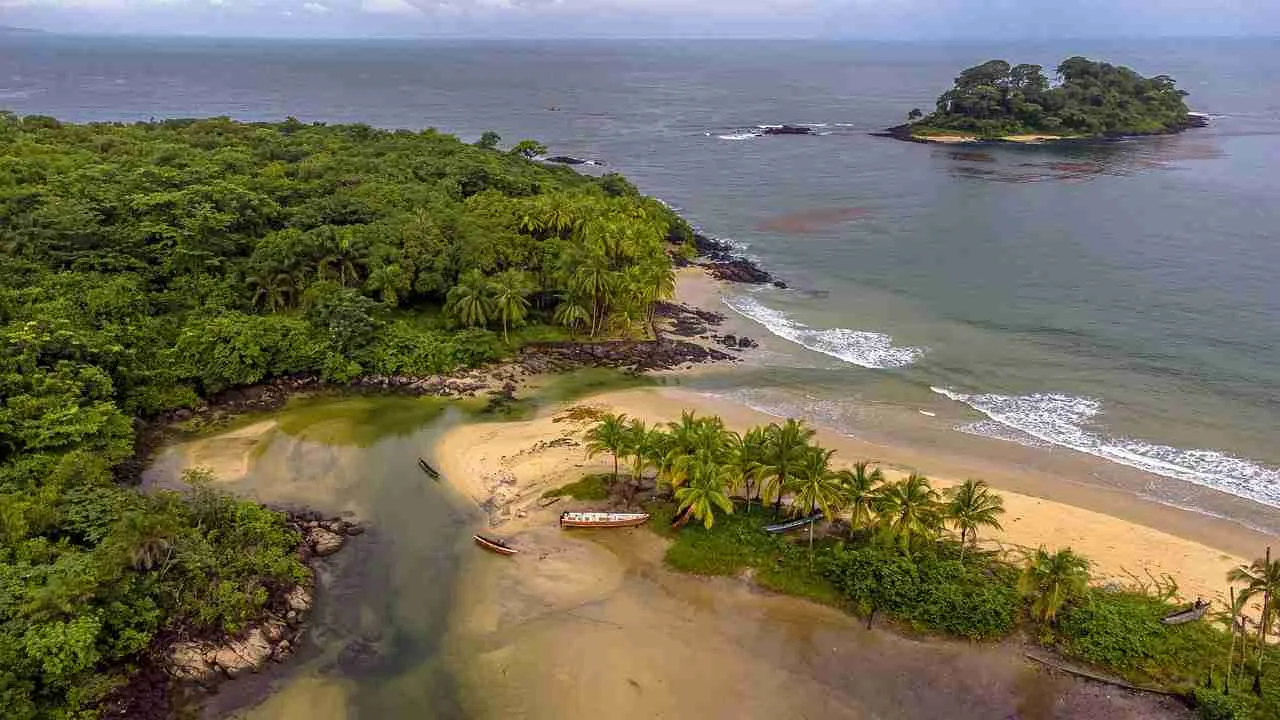
Tokeh beach is one of the largest and most attractive beaches in West Africa. It also has nearby mountains, forests and the uninhabited Tokeh Island a short boat ride away. Spend the day relaxing. Alternatively, take an optional scenic 25-minute walk along the white sandy beach.
Overnight in The Place Resort, Tokeh · Meals included: Breakfast, lunch, dinner
DAY 8
Goodbye to Sierra Leone
At a suitable time, transfer back to the airport for your international flight.
Interested in this tour?
Enquire About the Sierra Leone Explorer Tour
Tell us a little about what you’re looking for and one of our travel experts will get back to you.
Know Before You Go
Included & Excluded
What’s Included
Assistance at airport upon arrival and departure
Transfers and tours in a private air-conditioned vehicle
English speaking local guide
Tours and visits as per the programme
Accommodation as per itinerary
All meals as described – breakfast, lunch and dinner
What’s Not Included
International travel to the start and end point – contact us for information and flight options
Any airport taxes
Travel insurance
Any visa requirements/fees
Mineral water and drinks at meals
Any photography and video fees
Items of a personal nature
Tips for drivers and guides
Book With Confidence
Dates & Prices
This is a private tour, so we can run it at any time throughout the year. We can also tailor-make this tour to your exact requirements. Contact us for a quote.
From £2,295 per person, based on two people travelling and sharing a room
Good to Know
Travel Information
Safety, Passport, Visa and Health Information
We strongly recommend that you check your government's travel advisory for up-to-date information and advice about your destination. For example, it covers safety and security, entry requirements, health, local laws and customs. For UK citizens, check the latest Foreign, Commonwealth & Development Office advice for Sierra Leone.
Your passport should be valid for a minimum of 6 months from the time of your visa application. You will also need a visa to enter Sierra Leone. This is available on arrival for $80 cash, or you can apply in advance for an e-visa. Finally, check whether you need a yellow fever certificate via TravelHealthPro before you travel.
Sierra Leone has a tolerant multi-religious culture. Therefore, respect local traditions, customs and religions at all times. Do not become involved with drugs of any kind. In addition, all precious stones require an export licence. Criminal offences including drug trafficking or diamond smuggling carry heavy penalties and harsh local prison conditions. Homosexual acts are illegal in Sierra Leone.
At least 8 weeks before your trip, check the latest country-specific health advice. The National Travel Health Network and Centre (NaTHNaC) publishes this on the TravelHealthPro website. Rabies, Lassa fever, water-borne diseases, malaria and other tropical diseases are common. Cholera is also endemic, with outbreaks particularly during the rainy season. Therefore, drink or use only boiled or bottled water and avoid ice in drinks.
What to Bring
Bring lightweight, casual, non-synthetic clothing, because cotton and natural fibres are best. It should appropriately cover the body when you are in the company of local communities. In other words, it doesn't need to be fancy, but it needs to be respectful. Walking shoes or boots plus sandals are the ideal footwear.
Please allow yourself one main piece of luggage and a day-sack. You're expected to carry your own baggage, so don't overload yourself. For example, a soft wheely bag may be easier to manage than a suitcase. We also recommend a sunhat, sun cream, a torch, insect repellent and a reusable water bottle. Finally, bring a small medical kit for scrapes and cuts, and a power adapter for phones and laptops.
While You're There
The local currency is the Leone. It's best to bring Euros for exchange, because local currency is difficult to obtain outside the region. Your guide can also help exchange money at banks or hotels. ATMs are increasingly available in larger towns. However, you shouldn't rely on them as your main source of cash. Moreover, credit cards are only commonly accepted in larger hotels and restaurants, usually in Freetown only. Exchanging currency on the street or via unofficial changers is illegal, including at the airport. In fact, it has led to arrests even for small amounts.
The region has a dry season (October-April) and wet season (May-September). Most visitors travel in the dry season, although the wet season is feasible too. This is because it brings short, sharp rain bursts rather than all-day downpours. However, some roads can be difficult to pass. To use your mobile phone, contact your provider in advance for international roaming. Alternatively, purchase a local registered SIM card. Many hotels also offer wifi via wireless hotspots.
Ready to Book or Need More Information?
Get in touch with our expert travel consultants now. We can help you with tailor-made options, best times to travel and much more.