
Petra: A Timeless Jewel of Jordan Holidays
Petra, in southern Jordan, is one of the world's most extraordinary archaeological treasures. The city reflects the brilliance of ancient civilisations, and it lies hidden among rugged mountains and desert canyons. This UNESCO World Heritage site is often called the "Rose City" for the warm pink tones of its sandstone cliffs. Its story begins around 312 BC, when it became the capital of the Nabataean Kingdom.
The Nabataeans and Petra's Rise
The Nabataeans were a skilled Arab trading community. They carved Petra into the rock and transformed it into a thriving centre of commerce. Because the city sat on vital trade routes, it linked Arabia, Egypt, and the Mediterranean. As a result, spices, silks, and luxury goods passed through its gates.
Architectural Wonders of Petra
The city is celebrated for its intricate rock-cut structures and ingenious water systems. The most iconic landmark is Al-Khazneh, or the Treasury. It appears dramatically as visitors emerge from the narrow Siq gorge. Despite its name, this masterpiece was likely a royal tomb rather than a treasury. Furthermore, its ornate Hellenistic design reflects the Nabataeans' exposure to diverse influences through trade.
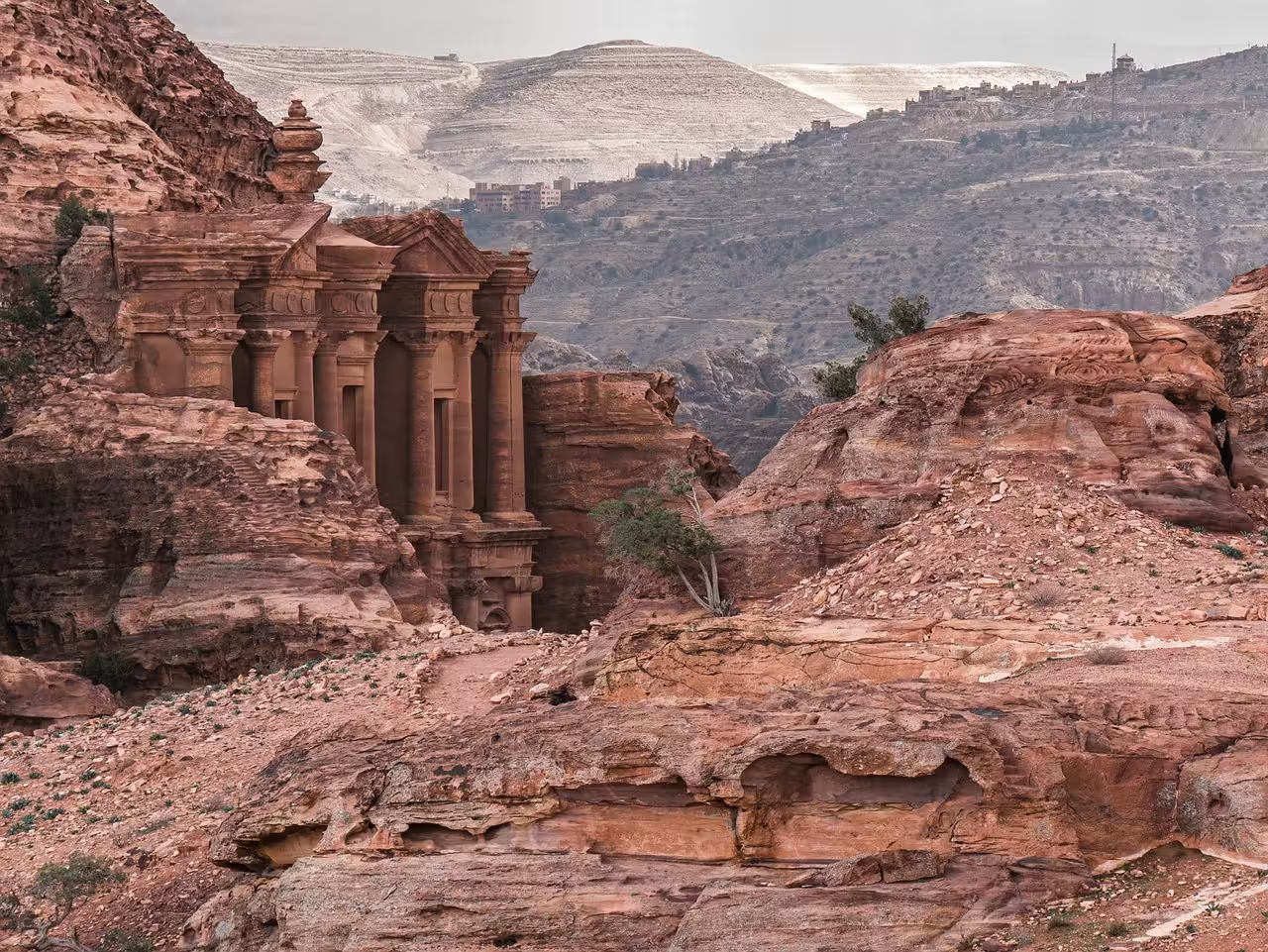
Other highlights include the Monastery, an imposing structure perched high above the valley. Similarly, the Royal Tombs showcase elaborate carvings and grandeur. The amphitheatre, capable of seating thousands, offers a glimpse into Petra's vibrant cultural life.
Ingenious Water Systems
Petra's success in an arid environment was due to its advanced water management. The Nabataeans built dams, cisterns, and aqueducts to collect and distribute water efficiently. In addition, public baths and fountains dotted the city, serving both practical and social purposes.
Decline and Rediscovery
Petra's decline began in the 4th century AD after earthquakes and shifting trade routes weakened its economy. By the Byzantine era, the city was largely abandoned, although it remained a pilgrimage site for Christians. Eventually, Petra faded from global memory until Swiss explorer Johann Ludwig Burckhardt rediscovered it in 1812.
Petra Today
Now recognised as one of the New Seven Wonders of the World, Petra attracts hundreds of thousands of visitors each year. Walking through the Siq and witnessing the grandeur of the Treasury transports travellers back in time. For an extraordinary experience, visit Petra at night, when lanterns cast a soft glow across the stone façades.
Petra is more than an ancient city; it is a testament to human creativity and resilience. For anyone planning a holiday to Jordan, exploring Petra is a must. Above all, it combines history, beauty, and wonder in a way few places can match.
Ready to Explore Jordan?
Get in touch with our expert travel consultants to include Petra in your itinerary.
See it on our tours: The Wonders of Jordan Tour and Saudi Arabia and Jordan Combined Tour.